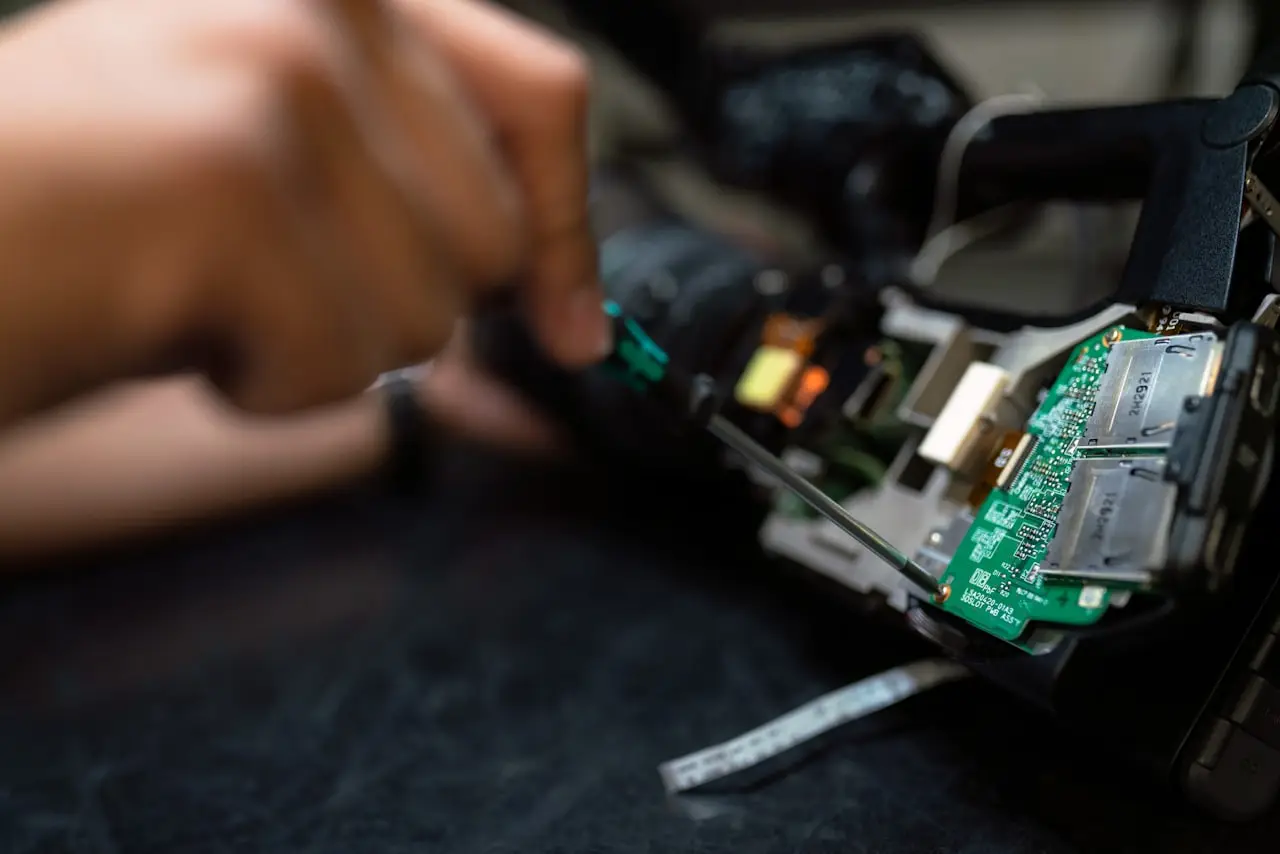
Samsung Display FPC Reflow (340°C Flux)
Galaxy display FPC / board connector intermittent no image — when hard-press restores picture, flux + hot-air reflow ~340°C for ~20 seconds, pad repair, and why these joints need frequent reheat.
Samsung display FPC connector faults are the hidden middle of many “no image after drop” tickets. The OLED is fine. The customer already replaced glass once. Pressing behind the board brings the picture back for a second — then it dies again. That pattern is intermittent interconnect, and shops often see the same footprint need repeat reflow until solder volume and pad health are actually restored.
Pair with the diagnostic tree: Samsung no display / no image.
When this article applies
- Hard-press near display FPC / board connector restores image
- Image dies when the phone warms or flexes
- Prior “screen replacement” did not change the fault
- Magnification shows dull/cracked joints or starved solder
If pressure does nothing and a known-good panel is black, look elsewhere (panel power rails, IC, etc.).
Why reheating “keeps coming back”
| Cause | Why reflow “fixes” briefly | Durable move |
|---|---|---|
| Micro-cracked solder | Heat remelts; crack returns under drop/thermal cycle | Proper wet-out + enough alloy |
| Oxidized pads | Flux helps once | Clean / pad repair |
| Lifted pad | Temporary contact | Rebuild / jumper |
| Torn FPC | Never a solder win | New flex / panel |
| Crushed connector housing | Intermittent wipe | Replace connector |
Customers hear “we reflowed it” every six weeks when the root was a lifted pad or a starved joint that only got kissed with heat.
Bench method (experienced techs)
Not a casual kitchen-table job. Hot air + phone batteries + flux fumes require ventilation, ESD, and battery disconnect discipline per your shop SOP.
1. Pressure map before heat
Mark the exact zone that restores image. Photo it. Guessing with a wide nozzle cooks neighboring shields and cameras.
2. Access
- Controlled open (separator when glass work requires it)
- Correct bits (precision set)
- Shields off the connector
- Magnification
3. Flux + hot air window shops actually use
A widely used starting recipe on many Galaxy board-side connector reflows:
- Quality liquid / paste flux on the joint
- Hot-air station setpoint around 340°C
- Work time on the order of ~20 seconds with appropriate nozzle and airflow
- Watch solder become live / glossy; do not bake the board “just in case”
Adjust for:
- Lead-free alloy
- Large ground planes sinking heat
- Distance and airflow (setpoint ≠ pad temperature)
Some techs preheat the board underside on a preheater — better than cranking 450°C from 5 cm away.
4. After reflow
- Clean flux residues that cause corrosion later
- Reseat FPC fully; confirm latch
- Reassemble enough to boot
- Flex / press / thermal burn-in: warm the phone, gentle twist test, confirm image stays
If it only lives while hot, you did not fix pad health — you softened a crack.
5. When reflow is the wrong tool
- Pads gone → rebuild or donor board
- Connector plastic destroyed → replace connector
- FPC copper torn → panel/flex assembly
- Corrosion green under the connector → clean + assess rails; sometimes sub-board territory if the interconnect is involved
Customer communication (reduces comebacks)
Write on the ticket:
- “Intermittent display FPC joint — pressure test positive at [zone].”
- “Reflow performed; if pads are compromised, board rebuild/swap may still be required.”
- “Drop damage can return if the chassis is bent.”
Bottom line
Map with hard-press → inspect → flux → controlled ~340°C / ~20s class reflow → burn-in. Repeat “reheat only” without fixing solder volume or pads is why the same Galaxy returns every month.
Bench: 2-in-1 750W soldering + hot-air station on Amazon, Sunshine DT17N digital multimeter for continuity before you blame the panel, and an iFixit Pro Tech Toolkit for shields.
Frequently Asked Questions
Why do some Samsung FPCs need frequent reheating?
Drop stress, weak solder volume, oxidized pads, and connector footprints that micro-crack. A joint can look seated and still open under thermal cycling until properly reflowed or the connector is replaced.
Is 340°C for 20 seconds a universal recipe?
It is a common shop starting window for many board-side connector reflows with flux and controlled air — not a guarantee. Nozzle size, distance, board layers, and lead-free alloy change the real pad temperature. Use a board temp mindset, not only station setpoint.
Can I reflow through the back glass?
No. Open correctly, disconnect battery when your procedure requires it, remove shields, flux the joint you mapped — not the whole phone.
Hard-press works — is reflow enough?
Often for cracked solder. If pads are lifted or the FPC fingers are torn, you need connector rebuild / jumper work or a board swap.
Aftermarket screen after reflow?
Prove with known-good OEM-grade panel. Reflow does not fix a bad OLED stack.
As an Amazon Associate, I earn from qualifying purchases. Affiliate disclosure
Related fixes
Samsung Touch Works but No Image? Separate the Paths
Galaxy digitizer/touch responds on a black screen — display FPC vs touch flex, ghost touch with no picture, known-good panel proof, and board-side next steps.
Read the fixSamsung No Image / Black Display?
Galaxy phone no image after drop or water — backlight vs OLED failure, display FPC, hard-press behind tests, known-good panel swaps, and when the board needs reflow or replacement.
Read the fixWhat Is the Android Secure Folder?
Explain Samsung Secure Folder (android_secure / Knox), how to set it up, move apps, troubleshoot lockouts, and prepare safely before phone repair.
Read the fix